Super Bowl Betting UK: Market Trends and Professional Props
 Available in US
Table of Contents
- Super Bowl Futures Pricing: Analyzing Pre-Season Champion Odds
- The Prop Market Explosion: Player, Game and Novelty Bets
- Live Betting the Super Bowl: In-Play Strategy for UK Punters
- UK Timing and Market Rhythm: Betting From a British Time Zone
- Bankroll Allocation for the Biggest Game of the Year
- Super Bowl Betting UK: Your Questions
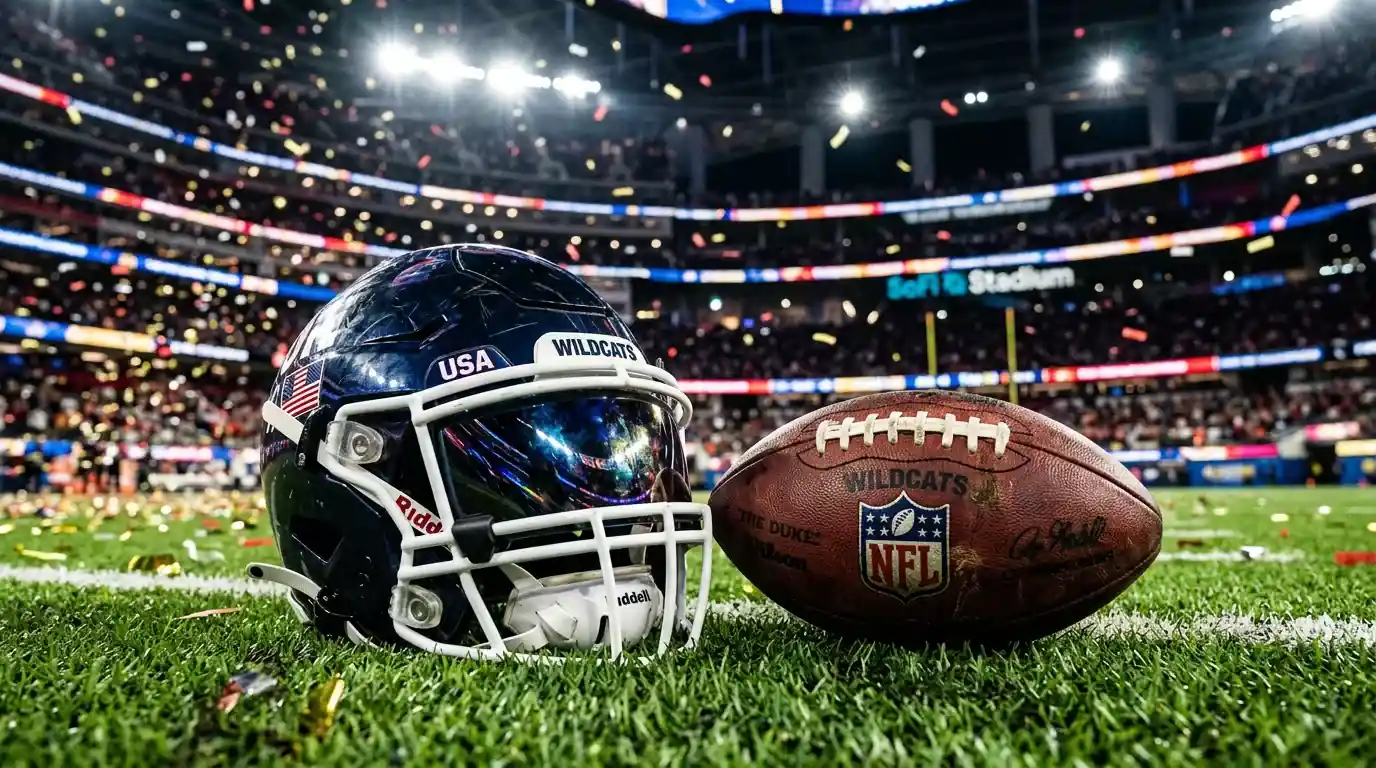
I stayed up until three in the morning for my first Super Bowl. Not because the game was gripping — it was a blowout by the third quarter — but because I had eleven prop bets running and every single snap carried a personal stake. The quarterback’s passing yards were ticking toward my over. The first scorer had already cashed at 9/1. And a same-game parlay that linked the margin of victory to a defensive touchdown was alive, improbably, heading into the fourth quarter. I went to bed at 3.15am, 340 pounds up, buzzing with the specific energy that only comes from watching a game where every statistical event connects to a wager you have researched for weeks.
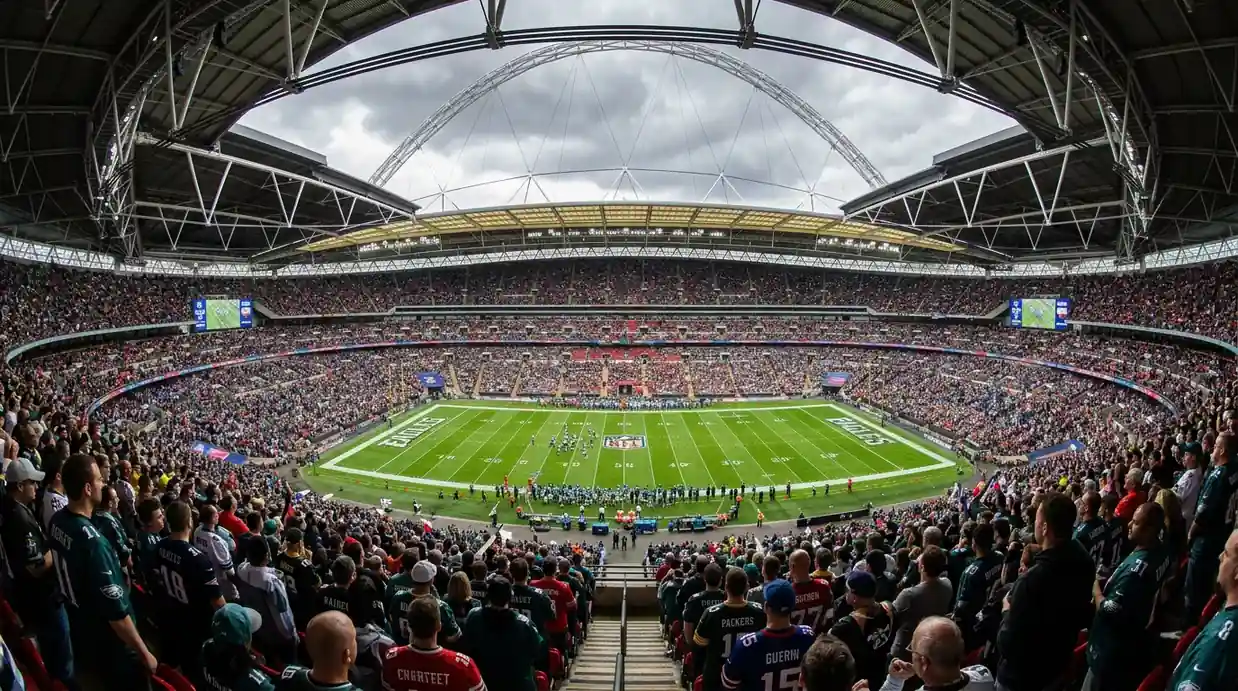
The Super Bowl is not just the biggest game in American sport — it is the biggest single-event betting market in the world. The projected handle for Super Bowl LX was $1.76 billion through regulated US channels alone, a figure that does not account for the substantial volume processed by UK and European operators. That money flows into a market structure unlike anything else on the NFL calendar: hundreds of prop markets that do not exist for regular-season games, futures that have been priced since the previous spring, live in-play markets with record-breaking liquidity, and a UK timing challenge that forces British punters to make strategic decisions about sleep, pre-game positioning, and in-play discipline.
This guide is built for UK-based bettors who want to approach the Super Bowl with the same analytical rigour they apply to the rest of the season. I will walk through how to identify value in futures months before the game, how to navigate the prop market without drowning in noise, how to structure live betting when the game starts at 11.30pm UK time, and how to size your stakes for a single-game event that generates more emotional and financial volatility than any other fixture on the calendar. If you want a breakdown of the underlying bet mechanics — spreads, moneylines, totals — start with the full guide to NFL bet types and circle back here for the Super Bowl-specific strategy.
Super Bowl Futures Pricing: Analyzing Pre-Season Champion Odds
The best Super Bowl bet I ever placed was in July. Not February — July. The team was +2500 (25/1) to win the championship, they had just drafted a franchise quarterback, and the market had not yet priced in the coaching upgrade they made in the offseason. By the time the regular season confirmed what the summer indicators suggested, the futures price had collapsed to +600. The Super Bowl itself was almost irrelevant to my return — the value was captured six months earlier.
Super Bowl futures open within days of the previous championship game, and they stay open through the draft, training camp, preseason, and the entire regular season. The further from the game you are, the wider the prices and the greater the uncertainty — which is precisely why the value tends to be largest early in the cycle. Bookmakers set futures prices based on power ratings, roster assessments, and public perception, and in the spring, all three inputs are unstable. The draft reshuffles talent, free agency changes rosters, and coaching changes alter offensive and defensive schemes in ways the market cannot fully price until the games begin.
The NFL generated $30 billion in legal wagers during the 2025 season, and a meaningful slice of that total was futures money placed months before the outcome was determined. The punters who capture the best prices are the ones who do their homework in March and April, not the ones who scramble to pick a winner during conference championship weekend. My futures process starts the day after the Super Bowl ends. I rank every team by three criteria: returning talent (measured by percentage of snaps from starters who are under contract), strength of schedule (which is published immediately after the season), and coaching stability. Teams that score well on all three — strong returning core, favourable schedule, no coaching upheaval — are my primary targets. I cross-reference those rankings against the futures board and look for prices that are at least two tiers longer than my model suggests they should be.
A critical warning about futures: your money is locked up until the bet resolves, which could be nine months away. A 50-pound futures bet placed in April at 25/1 is not available for regular-season wagering. That opportunity cost matters. I allocate no more than 5% of my total NFL bankroll to futures, spread across three to five positions, and I treat that allocation as a separate fund that does not interact with my weekly staking plan. The potential returns are exciting — a single 25/1 hit more than pays for a season of modest weekly losses — but the variance is extreme, and most futures bets lose. The discipline is in sizing them correctly so that a losing season of futures does not compromise the rest of your operation.
One more edge worth exploiting: midseason futures adjustments. If a team you targeted in the spring is performing well through Week 10 but has suffered a short-term setback — a key player on a two-week injury absence, a tough schedule stretch — the futures price sometimes drifts back up. That drift can be a second entry point at a longer price than the current form justifies. I placed my third futures bet on a championship contender at +800 in Week 12 of the 2024 season, after a two-game losing streak had spooked the market. They reached the conference championship. The bet lost, but the process was sound, and sound process is the only thing that compounds over time.
If you prefer predicting the champion months in advance, exploring the NFL futures betting markets can offer significant value before the playoffs begin.
The Prop Market Explosion: Player, Game and Novelty Bets
Two weeks before the Super Bowl, the prop market opens. Within 48 hours, it has swelled to over 400 individual betting propositions on a single game — more than the combined prop count for an entire week of regular-season action. That is not a market; it is a carnival. And like any carnival, it mixes genuine skill games with rigged attractions designed to take your money.
Player props are the skill games. A quarterback’s passing yards, a running back’s rushing attempts, a wide receiver’s receptions — these are quantifiable outputs driven by scheme, matchup, game script, and historical performance. The bookmaker prices them using projections derived from the official NFL data feeds, but those projections have limitations. They tend to weight recent performance heavily and account poorly for specific defensive matchups. If you have spent the season tracking how a defence performs against slot receivers, or how a quarterback’s completion percentage changes under pressure from a four-man rush versus a blitz-heavy scheme, you have information the projection models may not fully incorporate. For a deeper look at pricing mechanics across passing, rushing and touchdown markets, see the dedicated guide to NFL player prop bets.
The Super Bowl amplifies both the volume and the inefficiency of player props. Casual bettors pour money into star-player markets — the starting quarterback’s passing touchdowns, the featured running back’s rushing yards — and that money pushes prices in predictable directions. Stars are overbet. Secondary players are underbet. I consistently find the best value in Super Bowl props on the second and third receiving options, the defensive side of the ball, and the special teams. A kicker’s total made field goals, a punt returner’s yardage, a defensive lineman’s sacks — these markets attract less public attention and carry wider pricing variance between bookmakers.
Game props sit in a middle ground between skill and noise. First scoring method, total touchdowns, whether the game goes to overtime, which quarter has the highest scoring — these are events with genuine probabilities that can be modelled. The challenge is that the bookmaker’s overround on game props is consistently wider than on the primary spread and total markets. The UK remote betting market processes 290 million online bets per month across all sports, and event-level props draw disproportionate action from the recreational segment of that volume, which gives the bookmaker cover to inflate margins.
Then there are novelty props. The colour of the Gatorade poured on the winning coach. The length of the national anthem. The result of the opening coin toss. These are not bets in any analytical sense — they are lottery tickets marketed as entertainment, and the hold rate on them is eye-watering. I place one novelty prop per Super Bowl, always at the minimum stake my bookmaker allows, purely for the fun of having something absurd to shout about at 1am. That is the correct allocation: the minimum stake, clearly categorised as entertainment, and never confused with the serious portion of your Super Bowl betting card.
Live Betting the Super Bowl: In-Play Strategy for UK Punters
The Super Bowl live betting market is the fastest and deepest in-play environment you will encounter in NFL wagering. Over 60% of all European sports bets are now placed in-play, and the Super Bowl concentrates that tendency into a single four-hour window where the liquidity, the emotional intensity, and the speed of price movement all peak simultaneously. If you are not prepared for it, the experience will overwhelm you. If you are, it is the best in-play betting night of the year.
My in-play Super Bowl strategy rests on three principles. First, I pre-identify two to three scenarios that would create live value. Before kickoff, I write down conditional statements: “If Team A falls behind by 10+ points in the first half, their live moneyline will overcorrect because the public will abandon them.” Or: “If the game is within 3 points at halftime, the live total will reflect the scoring pace of the first half, but my analysis says the second half will play differently because of the defensive adjustments both coordinators prefer.” These are not predictions — they are triggers. When one of them fires, I already know what I want to do, and I can act in seconds instead of deliberating while the price slips away.
Second, I set a strict in-play bankroll. The total amount I am willing to wager live during the Super Bowl is fixed before the game starts — typically 3% of my overall NFL bankroll. That cap exists because the emotional environment of live Super Bowl betting is uniquely dangerous. Every touchdown swing, every turnover, every momentum shift generates an impulse to react. The bankroll cap converts a series of emotional impulses into a constrained allocation problem: I have a finite amount to deploy, so I had better deploy it on the highest-value opportunity, not the one that just made me jump off the sofa.
Third, I focus live bets on the markets where the bookmaker’s real-time pricing is slowest to adjust. The primary spread and total move almost instantly — algorithmic pricing engines update within seconds of every play. But secondary markets — next team to score, drive result, player props updated for current pace — often lag by 15 to 30 seconds because they require more complex recalculation. That lag is where the value lives. If a defence has just forced a turnover inside the opponent’s 30-yard line and the “next team to score” market has not yet adjusted to reflect the field position, the price on the team that gained the turnover may briefly offer value. These windows are short, but they repeat throughout the game, and a prepared bettor can capture them.
A word about second-half and quarter markets: the Super Bowl is the one game per year where halftime is long enough (typically 30 minutes for the entertainment programme) that the second-half line is essentially a separate market. Bookmakers post it during the halftime break, and the pricing reflects the first-half result plus adjustments for anticipated coaching changes. If you have a strong view on second-half game script — whether the trailing team will open up the passing game, whether the leading team will lean on the run to protect the clock — the second-half line is a cleaner bet than trying to predict those dynamics before the game starts.
UK Timing and Market Rhythm: Betting From a British Time Zone
Every UK-based NFL bettor faces the same question on Super Bowl Sunday: how do you manage a high-stakes, multi-hour betting event that starts at 11.30pm and ends sometime around 3am? I have tried every approach — staying up for the whole thing, napping beforehand and waking for kickoff, placing all bets pre-game and watching passively — and the answer depends on your betting style and your Monday morning obligations. But it always starts with preparation.
The Super Bowl line opens roughly two weeks before the game, immediately after the conference championships. That two-week window is the longest pre-game market for any single NFL contest, and it attracts more volume and more sophisticated action than any regular-season line. Sharp bettors stake early, the line moves in response, and by Super Bowl Sunday the closing number has been through multiple cycles of informed adjustment. Jonathan Licht of Sky Sports noted that Super Bowl viewership on the platform broke records in 2025, and that audience translates directly into a late-night UK betting market of meaningful size. The bookmakers know British punters are watching, and they price the late-night market accordingly.
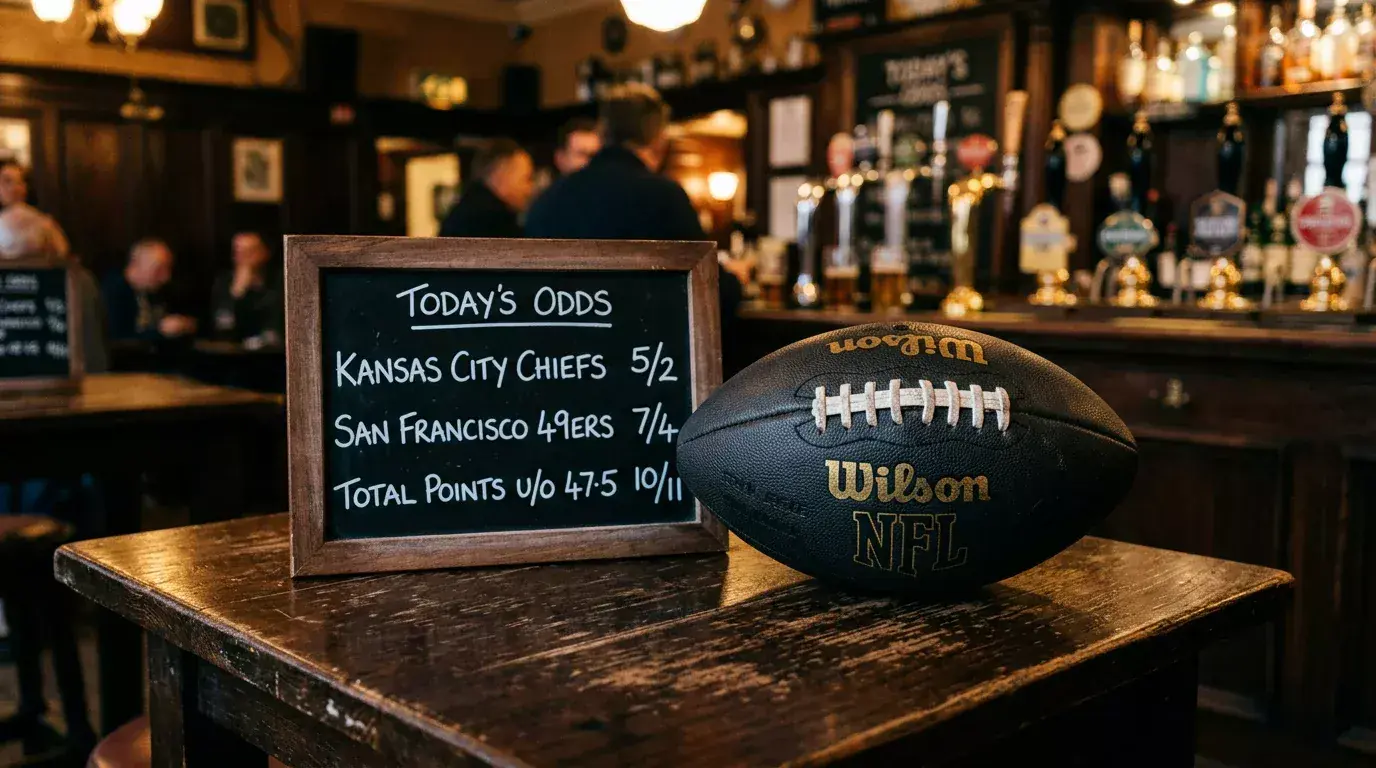
My timing protocol for Super Bowl Sunday starts in the afternoon. By 4pm, I have finalised my pre-game positions: the spread, the total, and any player props I have identified as value. I place these between 4pm and 7pm, before the evening social activities that inevitably surround Super Bowl Sunday in the UK — watch parties, pub screenings, gatherings with friends who want to understand what a fourth-and-goal decision means. Those social distractions are a genuine risk to live betting discipline, which is why I separate my pre-game and in-play strategies completely. Pre-game bets are locked by dinner. In-play bets happen only if I am watching the game with full attention, sober, and capable of executing my pre-identified triggers.
The UK’s gross gambling yield from the remote sector reached 7.8 billion pounds in 2025, with 46% of all gambling revenue now generated online. A significant portion of that digital activity spikes during marquee events, and the Super Bowl is the single biggest spike in the NFL calendar. UK bookmakers respond with enhanced coverage, additional markets, and promotional pricing designed to attract the wave of once-a-year bettors who only engage with American football during the Super Bowl. Those promotions — boosted odds, free bets, insurance on specific outcomes — have terms and conditions that almost always limit their genuine value. Read the small print, calculate the effective return after wagering requirements, and decide whether the promotion enhances your existing plan or simply encourages you to bet money you would not otherwise stake.
If you plan to go to sleep before the game ends — and there is no shame in that, particularly if you have work on Monday — place your positions pre-game, set up any cash-out triggers your bookmaker offers, and accept the result in the morning. The worst Super Bowl outcome for a UK bettor is not a losing bet; it is a losing bet placed at 2am out of fatigue, frustration, or the third pint, on a market you have not researched, at a price you would never accept at 4pm. Sleep beats tilt every time.
Stay updated with the latest championship odds and expert analysis at GRIDBET throughout the season.
Bankroll Allocation for the Biggest Game of the Year
Forty-five per cent of NFL bettors admitted to staking more than they could afford to lose. That number, alarming enough across a full season, becomes acute on Super Bowl night. The combination of a single high-profile event, extended social viewing, alcohol, and the emotional weight of the final game creates conditions perfectly designed to break bankroll discipline. I have watched it happen to smart, experienced bettors — people who would never stake 10% of their bankroll on a Week 7 game suddenly convince themselves that the Super Bowl is “different” and deserves a bigger commitment.
It is not different. It is one game. The variance on a single game is higher than on a portfolio of bets across a full week, which means the risk of a total loss on your Super Bowl allocation is correspondingly higher. My allocation rule is simple: the combined value of all Super Bowl bets — pre-game, props, live — does not exceed 5% of my total NFL bankroll. If my bankroll is 2,000 pounds, my entire Super Bowl card is capped at 100 pounds. Within that 100, I typically split it roughly evenly across three buckets: primary markets (spread and total), player props, and in-play. The split forces prioritisation — you cannot bet every prop that catches your eye when the total allocation is 30 to 35 pounds — and it prevents the “one more bet” creep that turns a structured card into an undisciplined scatter.
The hold rate across regulated sportsbooks climbed from 6.7% in 2018 to above 9% by 2025, and the Super Bowl’s wider prop margins push the effective hold even higher on that single event. The bookmaker is making more money per pound wagered on the Super Bowl than on almost any other fixture. Your defence against that structural disadvantage is the same as it is during the regular season: staking discipline, line shopping, and a refusal to bet markets where you do not have an analytical opinion. The Super Bowl offers hundreds of markets. You do not need to be in all of them. You need to be in the three or four where your analysis has identified genuine mispricing, at stakes that your bankroll can absorb without stress.
Gerrit Meier, the NFL’s head of international operations, has emphasised the UK as a priority market for the league’s global expansion. That expansion means Super Bowl visibility, betting volume, and market depth will grow in the UK with every passing year. The punters who establish disciplined Super Bowl betting habits now — structured allocation, pre-game preparation, in-play restraint — will be the ones best positioned as the market matures. The ones who treat the Super Bowl as an annual licence to gamble beyond their means will keep funding the bookmaker’s bottom line, year after year, wondering why the biggest night in sport always ends with an empty balance.
Super Bowl Betting UK: Your Questions
When should I place my Super Bowl bets as a UK bettor?
Finalise pre-game positions by early evening on Super Bowl Sunday — ideally between 4pm and 7pm UK time. The game typically kicks off at 11.30pm UK time, and lines are sharpest in the hours before kickoff. Placing early in the evening also separates your analytical decisions from the social and emotional environment of the late-night broadcast.
How much of my bankroll should I allocate to Super Bowl betting?
No more than 5% of your total NFL bankroll across all Super Bowl markets combined. Split that allocation across primary markets (spread, total), player props, and live in-play wagers. The single-game variance is high enough that overexposure on the Super Bowl can undo weeks of disciplined regular-season betting.
Are Super Bowl prop bets worth the wider margins?
Player props can offer genuine value if you have done matchup-specific research that the bookmaker’s projection models have not fully captured. Focus on secondary players and less popular markets where pricing is softer. Novelty props — coin toss, anthem length, Gatorade colour — carry inflated margins and should be treated as entertainment, not strategy.
Is live betting the Super Bowl different from regular-season in-play?
The liquidity is significantly higher, the price movements are faster, and the emotional intensity is unmatched. Set a strict in-play bankroll cap before kickoff, pre-identify scenarios that would trigger a live bet, and focus on secondary markets where algorithmic pricing lags behind real-time events. The halftime break also creates a distinct second-half market worth evaluating independently.
Created by the ”nfl Sports bet” editorial team.