NFL Prediction Markets: How Kalshi, Polymarket and Event Contracts Challenge UK Bookmakers
 Available in US
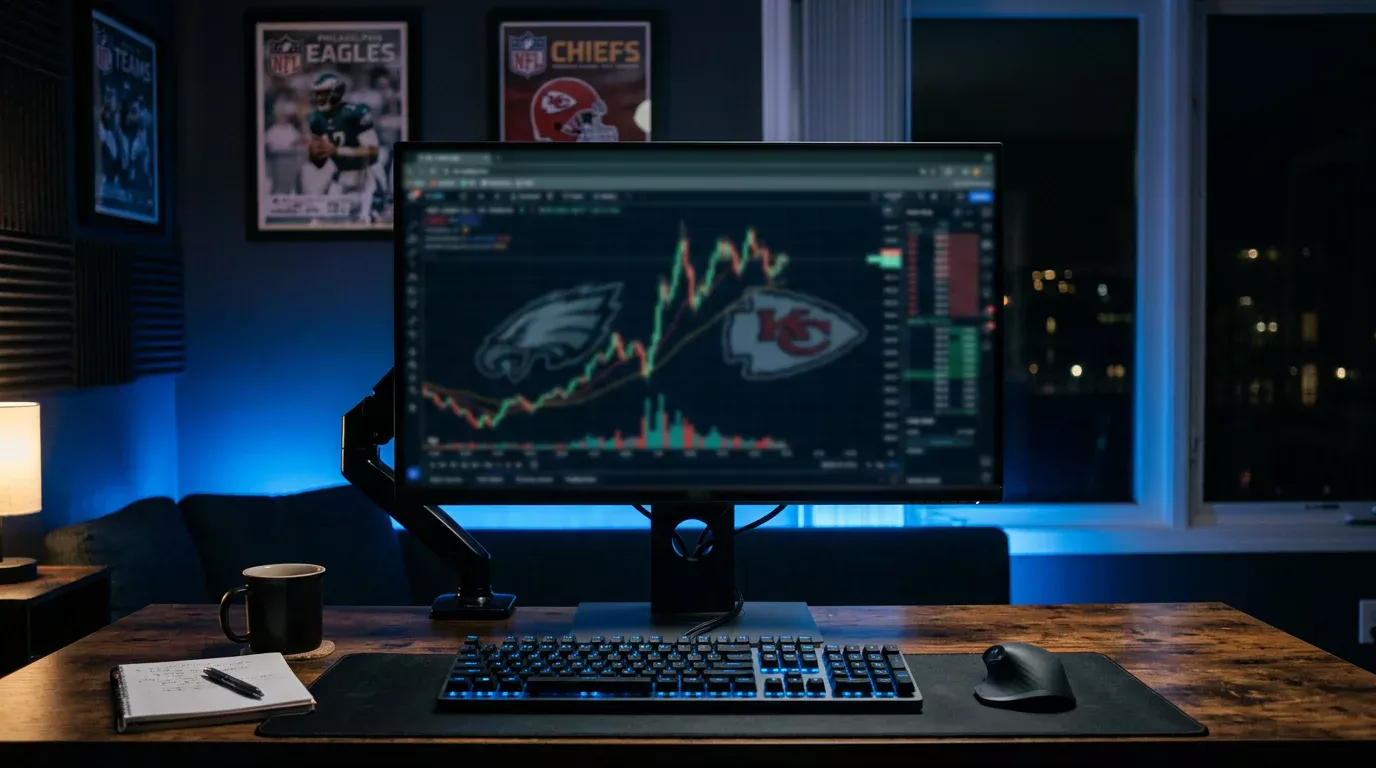
During Super Bowl LX week I watched Kalshi’s NFL contract volume tick past $62.5 million for the season, with the Super Bowl itself approaching $150 million in trading volume on that single platform. Meanwhile, the American Gaming Association was estimating that prediction markets had diverted more than $480 million in potential tax revenue away from licensed sportsbooks since early 2025. Two numbers, two very different reactions depending on which side of the argument you sit on. What nobody disputes is that prediction markets are reshaping how people wager on American football — and UK punters are watching from the sidelines, trying to work out whether this revolution will ever reach them.
Prediction markets are not bookmakers. They do not set odds, do not take a position against you, and do not profit from your losses. They are exchanges where participants trade binary contracts — yes or no on a specific outcome — at prices between zero and one hundred cents. The difference between a prediction market and a traditional bookmaker is the difference between a stock exchange and a shop. And that structural difference has implications for pricing, access and regulation that UK NFL punters need to understand, even if they cannot currently participate directly.
How NFL Prediction Markets Differ From Traditional Bookmaker Bets
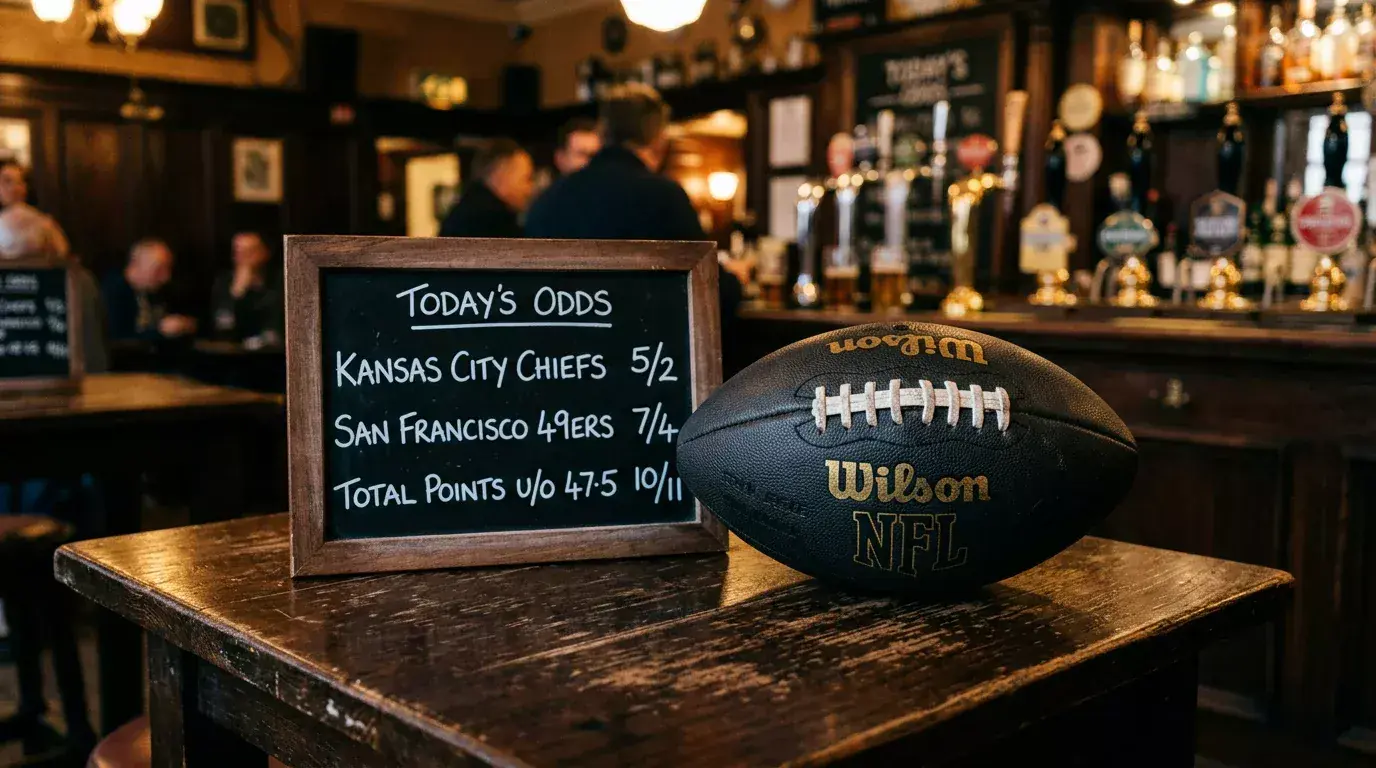
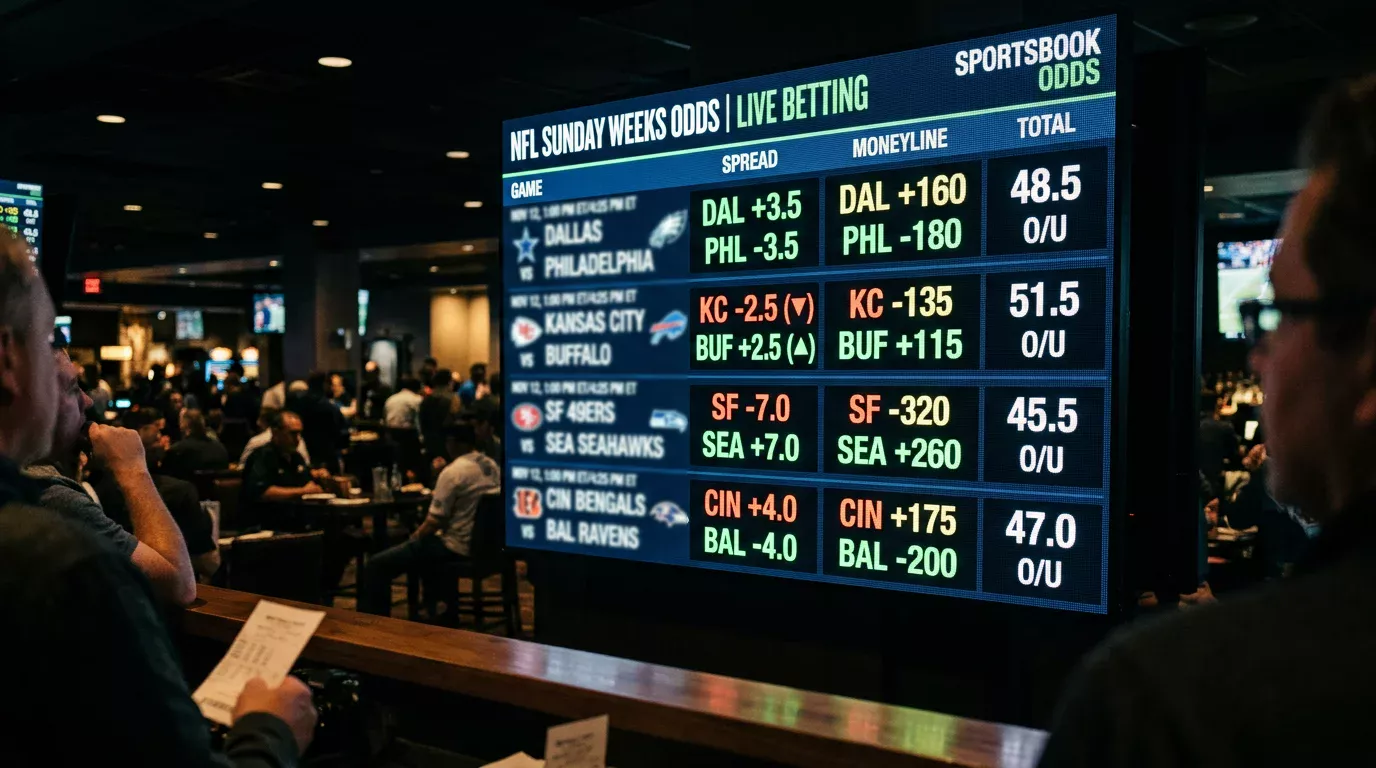
I spent two weeks last autumn trading NFL contracts on a US-based prediction exchange using a friend’s account — purely as a research exercise, and at minimal stakes — and the experience was noticeably different from placing bets at a UK bookmaker. The most striking thing was the absence of a built-in margin. On a standard NFL spread at a UK bookmaker, both sides are priced at roughly 10/11, giving the house a 4.5% overround. On the prediction exchange, I could buy “yes” on a team to cover at 52 cents and the “no” was trading at 49 cents. The three-cent gap was the exchange’s spread, but at certain points during active trading, that gap narrowed to a single cent — effectively zero margin.
The mechanics work like this: every contract settles at either 100 (the event happened) or 0 (it did not). If you believe the Chiefs will cover a three-point spread, you buy a “yes” contract at whatever the current market price is — say, 53 cents. If they cover, you receive 100 cents. Your profit is 47 cents per contract. If they fail to cover, you lose your 53-cent stake. The price itself is the implied probability: 53 cents equals a 53% implied chance.
What makes this interesting for NFL analysis — even if you never trade a contract — is that prediction market prices are often considered more accurate than bookmaker odds because they aggregate the views of thousands of participants without the distortion of a house edge. Academic research has repeatedly found that prediction markets outperform polls and expert forecasts in political and economic domains. The same principle applies to sports: when the market has no incentive to shade the price, the price tends to be closer to the true probability.
Can UK Punters Access NFL Prediction Markets? Regulatory Barriers
Short answer: not legally, not easily, and not without risk. Kalshi is a US-regulated exchange authorised by the Commodity Futures Trading Commission. It is not licensed in the UK, and UK residents are not permitted to open accounts. Polymarket operates in a greyer space — it is a crypto-based platform with no specific UK authorisation, and while it does not actively block UK users, accessing it may violate UK gambling regulations if the activity is classified as unlicensed gambling rather than financial trading.
The regulatory tension is real. The American Gaming Association’s Bill Miller has been vocal in criticising prediction markets, arguing that platforms which self-certify their contracts as financial instruments rather than submitting to gambling regulation are sidestepping consumer protections that exist for good reason. That critique resonates in the UK context, where the Gambling Commission’s licensing framework is specifically designed to ensure that anyone offering wagering products to UK consumers meets strict standards on fairness, responsible gambling and financial integrity.
From a UK punter’s perspective, the landscape is simple: if the platform is not licensed by the UK Gambling Commission, using it carries regulatory risk. Betting exchanges that are licensed in the UK — and there are several — already offer some of the structural advantages of prediction markets, including the ability to lay bets and trade positions. They are not identical to Kalshi or Polymarket, but they provide a regulated alternative that captures part of the exchange model.
The longer-term question is whether UK regulation will evolve to accommodate prediction market-style products. The Financial Conduct Authority has shown interest in event contracts as a financial product category, and there is active policy discussion about where the line falls between a “bet” and a “contract.” If that line shifts, UK punters could eventually access NFL prediction markets through properly licensed platforms. For now, the wait continues.
Market Impact: Are Prediction Exchanges Reshaping NFL Odds?
Even if you never trade a prediction market contract, these platforms are already affecting the NFL odds you see at UK bookmakers. The reason is information flow. Prediction market prices are public, update in real time, and aggregate a wide range of opinion. Bookmaker traders watch these prices alongside their own models, and when a prediction market moves sharply on an NFL game, the bookmaker lines tend to follow.
I have noticed this most clearly on NFL futures markets. During the 2025 season, Super Bowl winner prices on UK bookmaker sites often adjusted within hours of significant moves on Kalshi and Polymarket. The direction of the adjustment was consistent: when prediction markets shortened a team’s price, UK bookmakers shortened theirs. The magnitude was smaller — bookmakers do not simply copy exchange prices — but the signal was clear.
This creates an indirect benefit for UK punters who track prediction market pricing. If you see a team’s Super Bowl probability rise from 8% to 12% on Kalshi overnight, and your UK bookmaker has not yet adjusted their futures price, that lag represents a window of value. The window closes quickly, often within a few hours, but it exists because bookmakers update futures prices less frequently than real-time exchange markets.
The competitive pressure is also pushing UK bookmakers to tighten margins. When punters can see the “true” probability implied by a zero-margin exchange, they become less tolerant of wide overrounds on bookmaker sites. Several UK operators have reduced their NFL overround in the past two seasons, particularly on spread and totals markets where the comparison to exchange pricing is most direct. This is good news for UK punters regardless of whether they ever open a prediction market account.
The prediction market landscape is evolving rapidly. New platforms are launching, regulatory battles are intensifying, and the volume of NFL-related trading is growing season over season. Whether UK regulation opens the door to direct participation or not, the influence of these markets on NFL odds pricing is already here — and understanding how they work gives you a sharper lens on the numbers your bookmaker is offering.
Are NFL prediction markets like Kalshi available to UK residents?
Kalshi is regulated by the US Commodity Futures Trading Commission and does not accept UK residents. Polymarket operates on blockchain infrastructure without specific UK authorisation. Using unlicensed platforms may breach UK gambling regulations. UK punters seeking exchange-style NFL betting should consider licensed UK betting exchanges, which offer some similar features within a regulated framework.
How do prediction market prices compare to traditional NFL bookmaker odds?
Prediction markets typically operate with lower margins than bookmakers because prices are set by participant trading rather than a house edge. A standard NFL spread on a UK bookmaker carries a 4-5% overround, while the same market on a prediction exchange may have a spread of 1-3%. The tighter pricing means prediction market-implied probabilities are often considered closer to the true probability of an outcome.
Created by the ”nfl Sports bet” editorial team.