NFL Player Prop Bets: Analyzing Yardage and Touchdown Value
 Available in US
My first profitable NFL season was not built on spreads or moneylines — it was built on player props. Specifically, quarterback passing-yard totals. I had noticed that certain bookmakers were consistently setting lines based on season averages without adjusting for defensive matchups, and for about six weeks in 2020, that edge was large enough to exploit with straight overs and unders on passing yardage. The edge eventually closed, as they always do, but that experience taught me that player props are where individual research can overcome the bookmaker’s informational advantage.
Player props are booming. The projected $1.76 billion in handle for Super Bowl LX alone gives a sense of how much money flows through prop markets during the NFL’s biggest event. Props drive a significant portion of that volume because they let bettors wager on individual performances rather than game outcomes — and for many punters, especially those who follow specific players closely, that feels more intuitive than predicting which team covers a 3.5-point spread.
Quarterback Passing Props: Evaluating Yardage Performance Odds
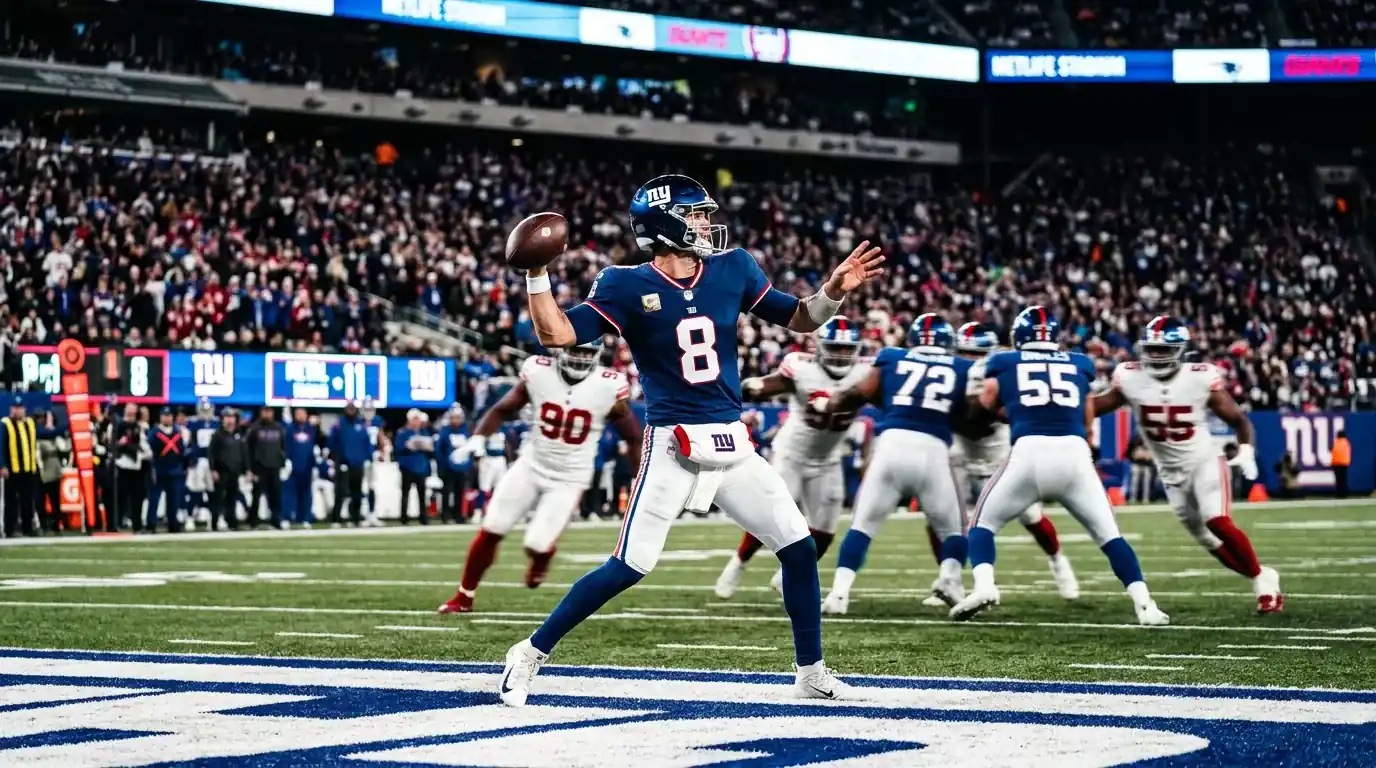
Every Sunday during the NFL season, I start my analysis with one question: how many times is each quarterback going to throw the ball? That number — pass attempts — is the single biggest driver of passing yardage, and it is more predictable than you might think. Teams trailing in game script throw more. Teams with weak running games throw more. Teams facing soft pass defences throw more. If you can estimate attempts within a reasonable range, you can estimate yardage.
UK bookmakers typically set passing-yard lines somewhere between 220 and 300 yards depending on the quarterback and matchup. The pricing is based on a combination of the player’s season average, the opponent’s defensive ranking, and implied game script from the spread. Here is where it gets interesting for anyone willing to dig deeper: those defensive rankings are often based on aggregate season numbers that do not account for recent injuries, schematic changes, or the specific passing concepts the offensive team favours.
A practical example. If a defensive coordinator lost his top cornerback to injury two weeks ago and the passing defence has allowed 30% more yards in the subsequent games, but the season-long ranking still looks respectable because of ten earlier games with the full secondary, the bookmaker’s line may not have adjusted enough. I look for exactly these discrepancies — situations where recent performance diverges from season-long averages, because the recent data is usually more predictive for the upcoming game.
One mechanical detail worth noting: passing yards in the NFL include air yards (the distance the ball travels) and yards after catch (what the receiver gains after securing the ball). This means a quarterback who relies on short passes to receivers who gain significant yardage after the catch can hit high yardage totals even if his downfield accuracy is limited. The box score does not distinguish between a 50-yard bomb and a 5-yard screen that the receiver takes for 45. Both count equally toward the prop.
To quickly lock in favorable lines for individual player performances, utilizing the best NFL betting apps in the UK is absolutely crucial.
Rushing Yards, Receptions and Receiving Yards
Rushing-yard props are where I have seen the most inconsistent pricing from UK bookmakers. The market is thinner than passing yards, which means fewer sharp bettors are keeping the lines efficient, and the bookmaker’s model relies heavily on season averages that can mask week-to-week volatility. A running back averaging 70 yards per game might have a distribution that looks nothing like a bell curve — he might produce 120 yards against weak run defences and 30 against strong ones, with very few games actually landing near 70.
I approach rushing props by studying the opposing defensive line first and the running back second. Defensive front quality determines the number of available rushing lanes, and that is the constraint on yardage far more than the running back’s individual talent. A backup running back on a team with a dominant offensive line will consistently outperform a star running back playing behind a porous one, at least in terms of raw yardage totals.
Reception props — how many catches a player makes — are a newer addition to most UK bookmaker platforms and remain inefficiently priced. Target share data, which tracks what percentage of a team’s passes are directed at a specific receiver, is publicly available and highly predictive of reception counts. If a receiver commands 25% of his team’s targets and the team is expected to throw 35 passes based on game script, you are looking at roughly 8-9 targets and can estimate receptions based on the player’s catch rate. This is basic arithmetic, and it consistently identifies mispriced reception lines.
Receiving yards combine the unpredictability of targets with the additional variance of yards after catch, making them the most volatile of the standard player props. I tend to take a position on receiving yards only when I have a strong view on game script — specifically, when I believe a game will be closer or more lopsided than the market expects, which directly affects how many passing opportunities a team generates.
Maximize your edge on player statistics by following the daily projections on our dedicated NFL betting guide.
Anytime and First Touchdown Scorer: Pricing and Edges
Touchdown scorer markets are the most popular player props among casual bettors, and that popularity is precisely what makes them interesting for the analytically inclined. The public overwhelmingly backs star players and big names, which creates a favourite-longshot bias that inflates prices on lesser-known players who score at similar rates.
Anytime touchdown scorer — a bet that a named player will score at least one touchdown during the game — is priced as an implied probability derived from the player’s touchdown rate, red-zone usage, and the opponent’s red-zone defence. Genius Sports holds a multiyear exclusive contract with the NFL to distribute official data through to the 2030 Super Bowl, and that data pipeline feeds the models bookmakers use to price these markets. The official data is comprehensive, but it does not capture everything. Coaching tendencies near the goal line, for instance, vary enormously and shift from week to week based on game plans. A team that ran 60% of its red-zone plays might switch to a pass-heavy approach for a specific matchup, and that kind of tactical shift is difficult for automated models to anticipate.
First touchdown scorer is the riskier variant — you are predicting not just that a player scores, but that he scores first. The prices are significantly longer because the additional condition dramatically reduces the probability. I treat first touchdown scorer bets as entertainment rather than analytical wagers, because the edge available on who scores first is negligible compared to the edge on whether a player scores at all. The variance is extreme: a single play on the opening drive decides the bet, and no amount of analysis can reliably predict which specific play call a coordinator will choose in that moment.
One approach I have found useful for understanding how touchdown markets fit within the broader spectrum of NFL bet types is to compare the implied probability of an anytime touchdown bet with the player’s actual touchdown rate over the last eight to ten games. If the bookmaker’s price implies a 35% chance but the data suggests 45%, you have a clear value indicator. Just make sure you are using a long enough sample — three or four games is not enough to overcome the noise in touchdown scoring, which is inherently high-variance even for the most prolific scorers.
How do I bet on NFL player props at UK bookmakers?
Navigate to the NFL section of your bookmaker’s app, select a specific game, and look for tabs labelled Player Props, Player Markets, or Player Specials. You will find options for passing yards, rushing yards, receptions, touchdown scorers, and sometimes more niche stats like interceptions or sacks. Select the line and direction (over or under), enter your stake, and confirm. Most major UKGC-licensed bookmakers carry these markets for every regular-season and playoff game.
Are player prop odds typically wider or tighter than game spreads?
Wider. Player props carry higher bookmaker margins than point spreads or totals because the markets attract more recreational money and the outcomes are harder to model precisely. A typical point spread might have an overround of 4-5%, while player prop markets can carry 6-10% or more. This means line shopping across multiple bookmakers is even more important for props than for game-level bets.
Created by the ”nfl Sports bet” editorial team.